 Civilization Rights Institute
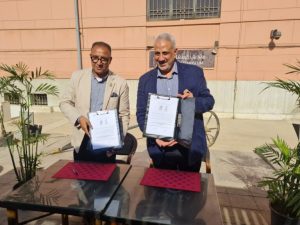
A Cooperation Protocol Between the Civilization Rights and the Protect Our Heritage
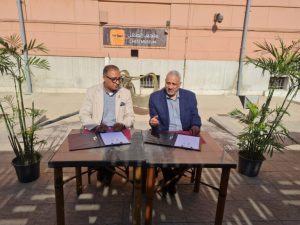
The protocol was signed by Dr. Ahmed Rashed, Professor of Architecture and former Head of the Architecture Department at the British University in Egypt, Founder and Director of the Farouk El-Baz Center for Sustainability and Future Studies, and Director of the Civilization Rights Institute in the United States, alongside Mr. Adel Hamdy, Chairman of the Board of Protect Our Heritage Foundation, in the presence of a distinguished group of scholars and experts in heritage, culture, and architecture.
This collaboration does not stem from viewing heritage as a static past to be preserved, but as a living entity that extends into the present and shapes the future. Civilization is not merely monuments or buildings; it is an integrated system of values, knowledge, skills, and ways of life that define the identity of societies.
From this perspective emerges the concept of “Civilization Rights,” which asserts that every civilization possesses both tangible and intangible rights. These include recognition of its origins, protection of its components, and assurance of its continuity—alongside a responsibility to evolve and elevate itself. It is a framework that balances civilizational integrity with renewal, and redefines the relationship between preservation and creativity.
Within this context, the establishment of “Civillizology” is introduced as a scientific framework dedicated to the rooting and contextualization of civilizations through the study of their origins and knowledge systems. This field goes beyond documenting monuments to uncover the deep network of sciences that produced civilizations—from architecture and engineering to astronomy, medicine, and social systems—on the basis that every civilizational product is the outcome of interaction between knowledge, environment, and culture.
Egyptian civilization offers a compelling example: the pyramids were not merely an architectural achievement, but the result of an integrated scientific system. Accordingly, safeguarding civilization is not limited to preserving its artifacts, but extends to understanding and documenting the full scope of its knowledge systems.
The project “Civillizology – The Nubian House” represents one of the practical applications of this approach. It focuses on documenting and rooting Nubian heritage, encompassing environmentally responsive architecture, deeply rooted social traditions, and original crafts. It stands as a living model demonstrating how heritage can remain an active part of everyday life, rather than a relic of the past.
The signing ceremony was attended by a number of prominent figures in heritage and cultural fields, including Dr. Safaa Mokhtar, Dr. Dalia Tag El-Din, Dr. Hager Saad El-Din, and Dr. Hosni Ahmed, along with Eng. Eman El-Saoudi, an expert in architectural heritage rehabilitation projects, in addition to stakeholders in cultural and tourism investment.
This protocol opens the door to a broader vision that extends to multiple civilizations, aiming to establish a scientific and legal framework that ensures fair protection of human heritage, enhances opportunities for global recognition, and preserves civilizational integrity and rightful attribution to its original communities.
It is a step toward fostering a new awareness:
one that sees civilization as both a right and a responsibility,
as a bridge between past and present,
and as a foundation for building a more balanced and meaningful future.
#CivilizationRights #Civillizology #HumanHeritage #ArchitectureAndIdentity #Sustainability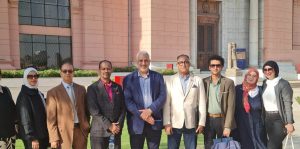
Civilization Rights Institute
Advancing the rights, science, and resilience of human civilizations.


No comment