 Civilization Rights Institute
Unveiling ‘Civilization Rights’: A New Paradigm for Global Heritage Protection
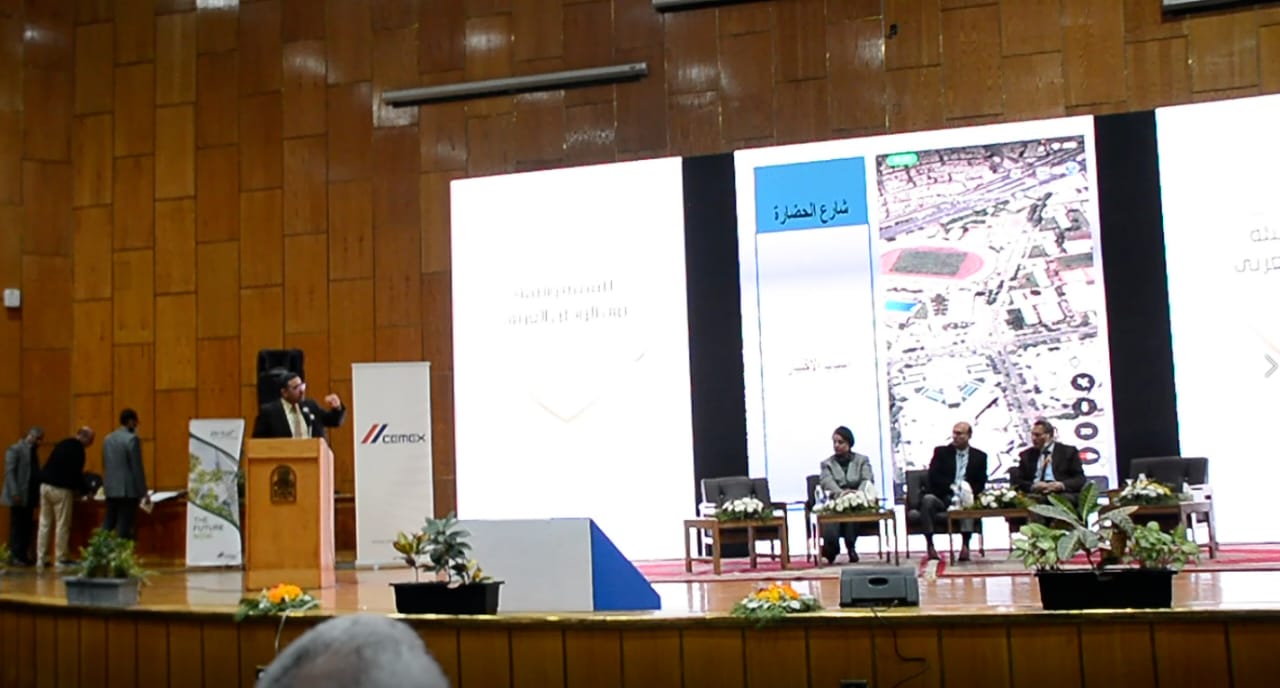
A Clarion Call for Heritage Justice
The Civilization Rights Institute (CRI) recently noted with great interest the insightful lecture delivered by Dr. Ahmed Yahia Rashed, Professor of Architecture and Director of the Sustainability and Future Studies Center at the British University in Egypt. Dr. Rashed’s presentation, titled ‘Civilization Rights for Building Civilization,’ at the 11th International Conference on Development and Environment in the Arab World at Assiut University, resonated deeply with our mission to protect heritage and promote justice.
The Paradox of Valued Heritage
Dr. Rashed eloquently highlighted a profound paradox: the revered status and international appreciation of Egyptian civilization and heritage abroad, contrasting sharply with the challenges and often neglect it faces within its original homeland. While acknowledging significant national efforts in discovery, preservation, and development, he underscored a critical question: how do we confront those who profit from our heritage, both domestically and internationally, without ensuring such gains actively contribute to its elevation, preservation, and sustainable future for generations to come?
“Civilization Rights for Building Civilization” posits a fundamental shift in how we perceive and protect our collective human heritage, moving beyond existing legal frameworks.
Introducing ‘Civilization Rights’: A Revolutionary Concept
At the heart of Dr. Rashed’s lecture was the introduction of a groundbreaking national initiative, championed by the Academy of Scientific Research and Technology and spearheaded by the Farouk El-Baz Center for Sustainability and Future Studies. This initiative proposes a novel scientific discipline: ‘Civilization Rights’.
This pioneering framework is designed to transcend the inherent limitations of intellectual property rights when applied to the vast and intricate domain of human heritage. While drawing selectively from intellectual property principles to construct its methodological and logical foundation, ‘Civilization Rights’ aims to establish a more comprehensive and fitting legal and ethical standard for the protection and equitable utilization of civilization’s legacies.
From Concept to Global Reference
The intellectual journey of ‘Civilization Rights’ has already achieved a significant milestone. In July 2020, the book ‘Civilization Rights for Building Civilization’ was published internationally. This publication serves as a foundational reference, presenting a robust scientific argument supported by extensive research, practical hypotheses, and logical scenarios. It invites vigorous discussion and debate, exploring the ‘impossible,’ the ‘possible,’ and the ‘available’ in shaping the future of civilization rights.
A Universal Imperative
Crucially, the scope of ‘Civilization Rights’ extends far beyond Egypt’s rich legacy. While born from the immediate needs of Egyptian heritage, this nascent field is envisioned to encompass the rights of all human civilizations. It seeks to establish a universal framework that ensures:
- Equitable access and benefits from shared heritage.
- Protection against exploitation and illicit trafficking.
- Sustainable stewardship for future generations.
- Recognition of the intrinsic value of cultural legacies beyond mere economic gain.
The journey for ‘Civilization Rights’ to become activated and binding international law will undoubtedly be extensive. However, the Civilization Rights Institute applauds this vital step towards a more just and sustainable future for global heritage. We commit to supporting and engaging with this crucial discourse, advocating for the principles that uphold the dignity and legacy of all human civilizations.
Civilization Rights Institute
Advancing the rights, science, and resilience of human civilizations.
